MetSalsa Library

Roots of salsa

Notes on 21 recordings, 1900–1924

Why each recording is in our collection, who made it, and where to hear the original. Every one was published in 1924 or earlier and is in the public domain in the United States.

1900–1911

Habanera and the first Cuban voices

The habanera rhythm left Havana in the 1800s and travelled the world. These are among the earliest recordings of Cuban singers and Cuban songs.

No. 1 · 1900

The first recording of a Cuban singer

Excerpt, 1900

Why it’s on our list

Florida International University, whose libraries hold the Díaz-Ayala collection of Cuban popular music, shared this excerpt as the first recording of a Cuban singer, made in 1900. Cristóbal Díaz-Ayala’s discography of Cuban recordings, published through FIU, is the main reference behind this collection.

About the singer

The video does not name the singer. Cristóbal Díaz-Ayala’s discography names the soprano Chalía Herrera as the first Cuban artist to record, on 48 Bettini cylinders made between 1898 and 1900, but FIU has not confirmed that this excerpt is hers. MetSalsa will name the singer once FIU identifies the recording.

Listen to the original on YouTube · Shared by Florida International University

No. 2 · 1901 · Rosalía “Chalía” Herrera, soprano

Tristes

Victor 3430, recorded June 3, 1901

Why it’s on our list

Díaz-Ayala names Chalía the first Cuban artist to make records and one of the first sopranos to record in the United States. This Victor side is one of at least 43 she made for the company between 1900 and 1903.

About Rosalía “Chalía” Herrera

Rosalía Díaz de Herrera was born in Havana on November 17, 1864. She studied in New York with the Cuban teacher Emilio Agramonte, made her debut there in 1894, and in 1895 sang at Weber Hall to raise money for Cuba’s War of Independence. She made about 135 recordings for Bettini, Victor, Monarch, and Zonophone, and died in 1948.

Listen to the original on YouTube · Shared by Tim Gracyk

No. 3 · 1905 · Orquesta Mexicana de Curti

La Paloma

Columbia D4034, matrix 5403, 1905

Why it’s on our list

Díaz-Ayala calls “La Paloma” a Latin song that “became immensely popular, and continues to be so.” In 1884 it became the first exported habanera to win wide popularity in Mexico, and in 1938 Jelly Roll Morton played it to demonstrate the “Spanish tinge” in jazz.

About Orquesta Típica Mexicana de Carlos Curti

Carlos Curti founded the Orquesta Típica Mexicana in 1884, with marimba, salterio, bandolón, and bajo sexto. Dressed in charro costume, the orchestra represented Mexico at the New Orleans Cotton Exposition, and it has been called a predecessor of the mariachi band. The song is by the Spanish composer Sebastián Yradier.

Listen to the original on YouTube · Shared by Historical recordings 78 RPM MFK

No. 4 · 1911 · Alma Gluck, soprano

Tú (habanera)

Victor 658, recorded March 22, 1911

Why it’s on our list

Sánchez de Fuentes wrote “Tú” at sixteen, and in the 1890s it became so popular that it came to stand for the habanera itself. Díaz-Ayala calls Chalía’s cylinder of it the first recording of Cuban music. This 1911 Victor side by an opera soprano shows how widely the song travelled on record. Enrico Caruso recorded it in 1914.

About Alma Gluck and Eduardo Sánchez de Fuentes

Alma Gluck, born Reba Feinsohn, sang at the Metropolitan Opera House in 1909 and made her first Victor records in March 1911, the month of this recording. Eduardo Sánchez de Fuentes (Havana, 1874–1944) remained best known for “Tú.”

Listen to the original on YouTube · Shared by Tim Gracyk

1907–1923

Danzón and the orquesta típica

Cornet, trombone, clarinets, violins, and timbales: the orquesta típica played Cuba’s national dance before salsa had a name. Its timbales lead straight to the instrument José documented.

No. 5 · 1907 · Orquesta de Felipe Valdés

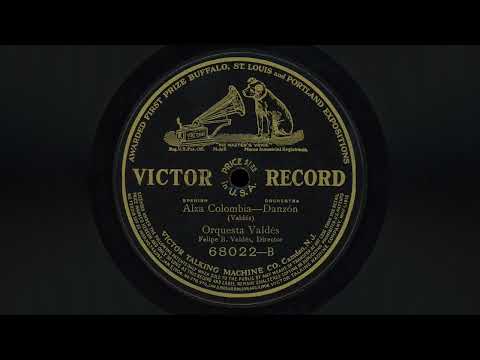
Alza Columbia

Victor 68022, Havana, March 6, 1907

Why it’s on our list

This disc comes from Victor’s first recording sessions in Havana, in 1907. Valdés’ cornet is unusually prominent and at times improvises over the melody. Both sides were later reissued on the Arhoolie collection The Cuban Danzón.

About Felipe Valdés

Felipe Valdés, a cornetist, formed his orchestra in 1899. Díaz-Ayala is quoted as saying that Valdés “recorded more danzons than any other típica in the twentieth century,” more than 300 sides in all.

Listen to the original on YouTube · Shared by Jazz Crazy

No. 6 · 1907 · Orquesta de Felipe Valdés

La Machicha

Victor, Havana, 1907

Why it’s on our list

The other side of the same 1907 disc, and a clear example of the change Valdés brought to the danzón. His cornet plays with the ensemble, drops out for the second section, and takes the melody at about 1:10, at the start of the third.

About Felipe Valdés

Gerardo García Mata’s University of Houston dissertation traces how, in a period when violin and clarinet carried the danzón melody, Valdés gave the cornet a larger role from 1907. Valdés recorded for Edison, Columbia, Victor, and Zonophone.

Listen to the original on YouTube · Shared by Jazz Crazy

No. 7 · c. 1908 · Orquesta de Felipe Valdés

Se componen bateas

Columbia, matrix 37644-1, Havana, c. 1908

Why it’s on our list

A driving minor-key danzón with clarinet improvisation and heavy drums, recorded by Columbia’s mobile unit in Havana around 1908. Restorer Colin Hancock transferred it from his own collection.

About Felipe Valdés

Valdés was an Afro-Cuban cornetist from Bolondrón. By 1906 he was recording for Edison and Columbia. The photograph in the video shows Enrique Peña’s orchestra, not Valdés’.

Listen to the original on YouTube · Shared by Desdemona202

No. 8 · 1909 · Orquesta de Enrique Peña

Punto cubano

Victor 62327, Havana, February 1, 1909 (Library of Congress National Jukebox)

Why it’s on our list

Preserved in the Library of Congress National Jukebox, this 1909 Victor side sets a punto, the countryside song form, for a Havana dance orchestra. The composer is Antonio María Romeu, who led Cuba’s foremost charanga for more than thirty years.

About Enrique Peña

Enrique Peña Sánchez (1880–1922) was born in Puerto Padre, in the old province of Oriente, and moved to Havana in 1902. His orchestra is credited with introducing José Urfé’s “El bombín de Barreto,” described as the first danzón with a son-influenced third section, and recorded about 150 numbers.

Listen to the original on YouTube · Shared by AMadHorse

No. 9 · 1913 · Orquesta de Pablo Valenzuela

La frita

Victor 65351, Havana, March 26, 1913

Why it’s on our list

Valenzuela’s orchestra was among the first ever recorded in Havana: American Zonophone cut more than 80 of its titles there in 1905. “La frita,” his own composition, is listed among his lasting hits.

About Pablo Valenzuela

José Pablo Valenzuela García (1859–1926) was born in San Antonio de los Baños. His orchestra grew out of La Flor de Cuba, the band his brother Raimundo led until 1905, and recorded about 120 numbers.

Listen to the original on YouTube · Shared by Desdemona202

No. 10 · c. 1916 · Orquesta del Teatro Alhambra

Galleticas de María

Columbia C2932, Havana, c. 1916

Why it’s on our list

A Romeu danzón, played by the house orchestra of the Alhambra, Havana’s most popular theatre. The early charangas added the pailas criollas, the instrument now called timbales, which José Obando traces in his timbal documentary.

About the Alhambra orchestra and Antonio María Romeu

The orchestra was probably directed by Jorge Anckermann, who returned from Mexico in 1911 to compose for and lead it. Antonio María Romeu (1876–1955), “El Mago de las Teclas,” led Cuba’s foremost charanga for more than thirty years and wrote or arranged more than 500 danzones.

Listen to the original on YouTube · Shared by Desdemona202

No. 11 · c. 1918–19 · Orquesta de Enrique Peña

La cumbancha

Columbia C3550, Havana, c. 1918–19

Why it’s on our list

A danzón orchestra playing a theme by Manuel Corona, the trovador who taught María Teresa Vera. It links the dance orchestras to the trova and son singers later in this collection.

About Enrique Peña and Manuel Corona

Enrique Peña was born in 1880 to a Spanish father and a formerly enslaved Black mother. He began on clarinet before taking up the cornet, and he died in 1922, before electrical recording arrived.

Listen to the original on YouTube · Shared by Desdemona202

No. 12 · 1923 · Orquesta Francesa de Armando Valdés

Arriba Luque

Columbia C4231, New York, c. August 1923

Why it’s on our list

Flute, violins, and piano, with no brass: the orquesta francesa, or charanga. This line-up later reached salsa through the charanga bands of New York. The disc is one of the last issues in Columbia’s C series for the Spanish-language market.

About Armando Valdés Torres

The uploader identifies the leader as Armando Valdés Torres, a bandleader and composer of the 1920s, recording in New York around August 1923. We have not found an independent biography of him.

Listen to the original on YouTube · Shared by Desdemona202

1917–1924

Early son and trova

Tres, guitar, bongó, claves, and maracas. The son came to Havana from Oriente and became the backbone of salsa.

No. 13 · 1917 · Cuarteto Oriental

Amor de Caridad

Columbia C2996, New York, c. March 1917. Shared from the Museo Nacional de la Música, Havana

Why it’s on our list

Havana’s Museo Nacional de la Música calls this the oldest recording by a son group in its collection. Columbia recorded it in New York in early 1917, one of four titles by the group.

About Cuarteto Oriental

The Cuarteto Oriental was led by the Santiago-born tresero Ricardo Martínez. The writer Sigfredo Ariel describes it as the core of the later Sexteto Habanero. The group grew into the Sexteto Típico Oriental, with Carlos Godínez as director.

Listen to the original on YouTube · Shared by Godínez Más

No. 14 · 1918 · Sexteto Habanero Godínez, with María Teresa Vera

Amalia Batista

Victor 72385, Hotel Inglaterra, Havana, February 8, 1918

Why it’s on our list

Díaz-Ayala calls the six recordings from this session, “barring proof to the contrary,” the first sones played in the sextet format that later became standard. It opens with the tres, then María Teresa Vera sings the first line just ahead of the chorus.

About Sexteto Habanero Godínez and María Teresa Vera

The sexteto was led by the tresero Carlos Godínez. Sources disagree on who else played that day. The historian Jesús Blanco names Vera, Manuel Corona, Alfredo Boloña, and Jesús Matos alongside Godínez.

Listen to the original on YouTube · Shared by Jaime Delgado (Cafe Mambo Project)

No. 15 · 1918 · Sexteto Habanero Godínez

Mujer bandolera

Victor 72644, Havana, February 8, 1918

Why it’s on our list

From the same session at Havana’s Hotel Inglaterra on February 8, 1918, shared by the Godínez family’s own channel. Citing Díaz-Ayala, the family credits Godínez with fixing the son’s structure: tres introduction, body, tres bridge, and montuno.

About Carlos Godínez

Carlos Godínez was born in Regla, Havana, on October 13, 1893. He learned the tres while serving in the army in Santiago de Cuba (1909–1912), formed his sexteto in 1916, and is credited as one of the first to add the third voice typical of Havana son on record.

Listen to the original on YouTube · Shared by Godínez Más

No. 16 · 1919 · María Teresa Vera and Rafael Zequeira

Longina

Columbia C3474, Havana, 1919

Why it’s on our list

A song by Manuel Corona, Vera’s teacher, sung by the trova duo of Vera and Zequeira. Vera also sang lead on “Amalia Batista,” recorded the year before.

About María Teresa Vera and Rafael Zequeira

María Teresa Vera was born in Guanajay on February 6, 1895, and made her debut in 1911 singing Corona’s “Mercedes” with Corona on guitar. The tenor Rafael Zequeira became her second voice, and the two sang together until his death in 1924. They made more than a hundred recordings in New York, most of which have not survived.

Listen to the original on YouTube · Shared by robert de saint loup

No. 17 · 1924 · María Teresa Vera and Rafael Zequeira

Rosa negra

Victor 78334, New York, June 23, 1924

Why it’s on our list

Recorded in New York on June 23, 1924, in the duo’s last year together. It is the latest recording in this collection.

About María Teresa Vera and Rafael Zequeira

Zequeira fell ill and died in 1924. In 1925 Vera formed the Sexteto Occidente with Ignacio Piñeiro on bass.

Listen to the original on YouTube · Shared by robert de saint loup

1910–1917

Puerto Rican danza

Puerto Rico’s salon dance, from the island that gave salsa many of its greatest players.

No. 18 · 1910 · Orquesta Cocolía

Danzas de Juan Morel Campos

Columbia, San Juan, 1910. Compilation, about 90 minutes

Why it’s on our list

These 28 surviving sides are almost all danzas by Juan Morel Campos (1857–1896), the composer who brought the Puerto Rican danza to its height, played by a musician from his own orchestra. Columbia recorded them in San Juan in 1910, and “Felices días” and “Maldito amor” are among them.

About Domingo Cruz, “Cocolía”

Domingo Cruz Gutiérrez was born in Ponce on July 3, 1864, and was known as the “Rey del Bombardino” in Morel Campos’ orchestra La Lira Ponceña. The Instituto de Cultura Puertorriqueña writes that Morel Campos wrote difficult passages as challenges for him.

Listen to the original on YouTube · Shared by Emanuel Olivieri

No. 19 · 1910, 1917 · Orquesta de Manuel Tizol

Orquesta de Manuel Tizol

Columbia 1910 and Victor January 1917, San Juan. Compilation, about 40 minutes

Why it’s on our list

Danzas by Simón Madera, Rafael Márquez, Ángel Mislán, Juan Ríos Ovalle, and Félix Astol, with a danzón, waltzes, pasodobles, and a seis chorreao. The Discography of American Historical Recordings matches all 13 sides to Tizol’s San Juan sessions for Columbia in 1910 and Victor in January 1917.

About Manuel Tizol

Manuel Tizol Márquez (1876–1940) of San Juan was a violinist, bassist, arranger, and conductor. Puerto Rico’s Fundación Nacional para la Cultura Popular calls him the leading figure in the island’s instrumental music in the first half of the twentieth century. He founded San Juan’s Sociedad de Conciertos in 1913 and, in 1926, the first official Puerto Rico Symphony Orchestra.

Listen to the original on YouTube · Shared by Emanuel Olivieri

1922–1923

The Spanish tinge

Jelly Roll Morton called the Caribbean rhythm in early jazz the “Spanish tinge.” Listen for the habanera under these blues.

No. 20 · 1922 · Handy’s Memphis Blues Band

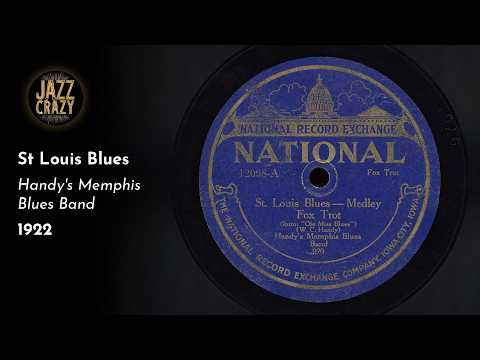
St. Louis Blues

National label, from a licensed Paramount master, 1922

Why it’s on our list

The Smithsonian’s National Museum of American History calls “St. Louis Blues” habanera-based: its 16-bar bridge uses the habanera rhythm, which Handy called “tango.”

About W. C. Handy

W. C. Handy published “St. Louis Blues” in 1914 and had heard Cuban music on a trip to the island in 1900. His Memphis Blues Band recorded this version in New York in January 1922. It was first issued on Paramount.

Listen to the original on YouTube · Shared by Jazz Crazy

No. 21 · 1923 · Jelly Roll Morton, piano

New Orleans Joys

Gennett 5486, 1923

Why it’s on our list

Morton said that without “tinges of Spanish,” jazz would never get “the right seasoning.” Musicologist Charles Hiroshi Garrett calls this piece a “twelve-bar blues-tango,” with the tresillo rhythm driving the bass line.

About Jelly Roll Morton

Jelly Roll Morton was a New Orleans pianist, composer, and bandleader. He recorded this solo for Gennett in 1923, and in 1938 he introduced it to Alan Lomax at the Library of Congress by pointing out its Spanish tinge.

Listen to the original on YouTube · Shared by My Old Jazz

How we wrote these notes

Each note draws on the discographies, archives, and reference works below, and on the notes written by the collectors and archives who share each transfer. Where sources disagree, we say so or leave the detail out until it is confirmed.

Sound recordings published in 1924 or earlier are in the public domain in the United States. Status can differ in other countries. The transfers belong to the channels that share them; MetSalsa links to them and does not host them. To report a problem with a recording or a note, use the contact form on our Privacy Policy page.