José Luis Obando Borja
1954 — 2026
Folklorist, ethnomusicologist, and educator — a man who spent his life making the case that salsa is history you can hear, and who carried that history into the world’s great museums, concert halls and classrooms.
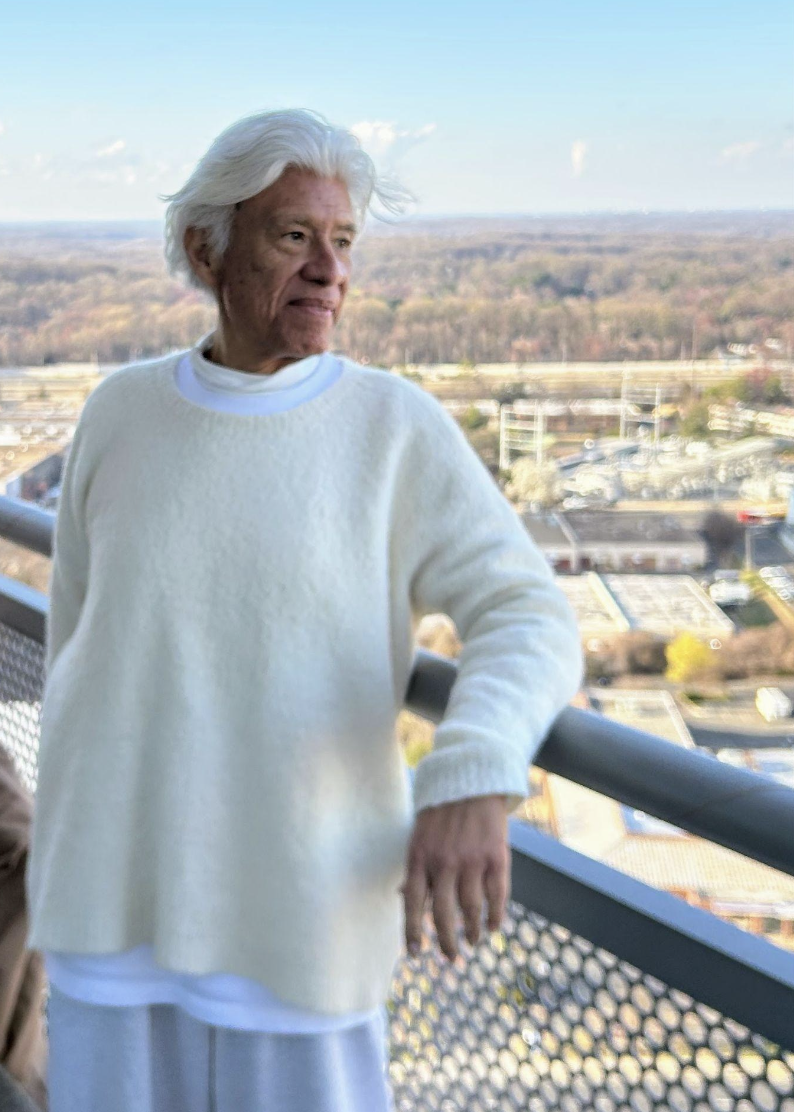
José Luis Obando Borja was born in Guayaquil, Ecuador, in 1954, and came to New York City in 1963. He grew up hearing salsa, and he never strayed far from the roots of that music — he made its study, and its teaching, his life’s work.
From 2001, he served as the Salsa Consultant to the Department of Musical Instruments at The Metropolitan Museum of Art, researching the instruments that pertain to salsa and the Afro-Native-Antillean traditions behind them. He was, by many accounts, the nation’s only museologist dedicated to salsa.
He was one of the incorporators of the Salsa Museum in Spanish Harlem and served as its executive director, before stepping down to found Lubona Corporation — an education consultancy through which he presented museum lectures on the 350-year evolution of salsa. Grounded in Urban Ethnomusicology and augmented by a live ensemble, his lecture-demonstrations reached every level of education, from lower school to post-graduate faculty development.
He insisted on the distinction that defined him. “I don’t read music,” he once said, “because if I start reading it I would stop feeling it.” His lectures taught geography, history, theology, anthropology and more — salsa as a lens on the whole human story.
José passed in early 2026, after a brave battle with pancreatic cancer. This site celebrates his life and carries his mission forward: to keep salsa, and the living study of its roots, alive for every generation.
“I am not an entertainer — I am an educator.”
A life of contributions
Salsa Consultant, The Metropolitan Museum of Art
From 2001, advisor to the Department of Musical Instruments — the nation's only museologist dedicated to salsa.
Founder & CEO, Lubona Corporation
An education consultancy presenting museum lectures on the development of salsa across the country.
Salsa Museum, Spanish Harlem
One of the incorporators of the Salsa Museum in El Barrio, and its former executive director.
Folklorist & Ethnomusicologist
A lifelong student of Afro-Caribbean music, devoted to preserving Latin American cultural heritage.

A letter from The Met
In 2016, J. Kenneth Moore — the Frederick P. Rose Curator in Charge of the Department of Musical Instruments — set down in writing what José meant to the Museum after a decade and a half of collaboration.
“Since 2001 as Salsa Consultant he presented a number of public educational programs… he has presented programs encompassing Mexican, Guatemalan, Afro-Ecuadorian, Dominican, Puerto Rican, and Nuyorican music and dance traditions… These films are invaluable historic documents.”
Over those sixteen years, José advised on the acquisition of seven instruments and three documentaries for the Met’s collection of some 5,000 instruments, and worked with makers, documentarians and consulates to record traditions that might otherwise have gone undocumented. As Moore wrote, his presentations were “clear, insightful as well as entertaining.”
Where he taught
Over the decades, José brought his lecture-demonstrations to museums, universities, cathedrals, libraries and schools across the country.
- ·The Metropolitan Museum of Art
- ·The Juilliard School
- ·The Cathedral of St. Patrick
- ·The Apollo Theater
- ·U.S. Naval Academy
- ·Harvard University
- ·New York Public Library
- ·Horace Mann School
- ·Riverdale Country School
- ·Grace Church School
- ·Drew University Theological School
- ·El Museo del Barrio
Keep his work alive
Watch his lectures and performances, or share a memory of the man who taught a city to hear its own history.